
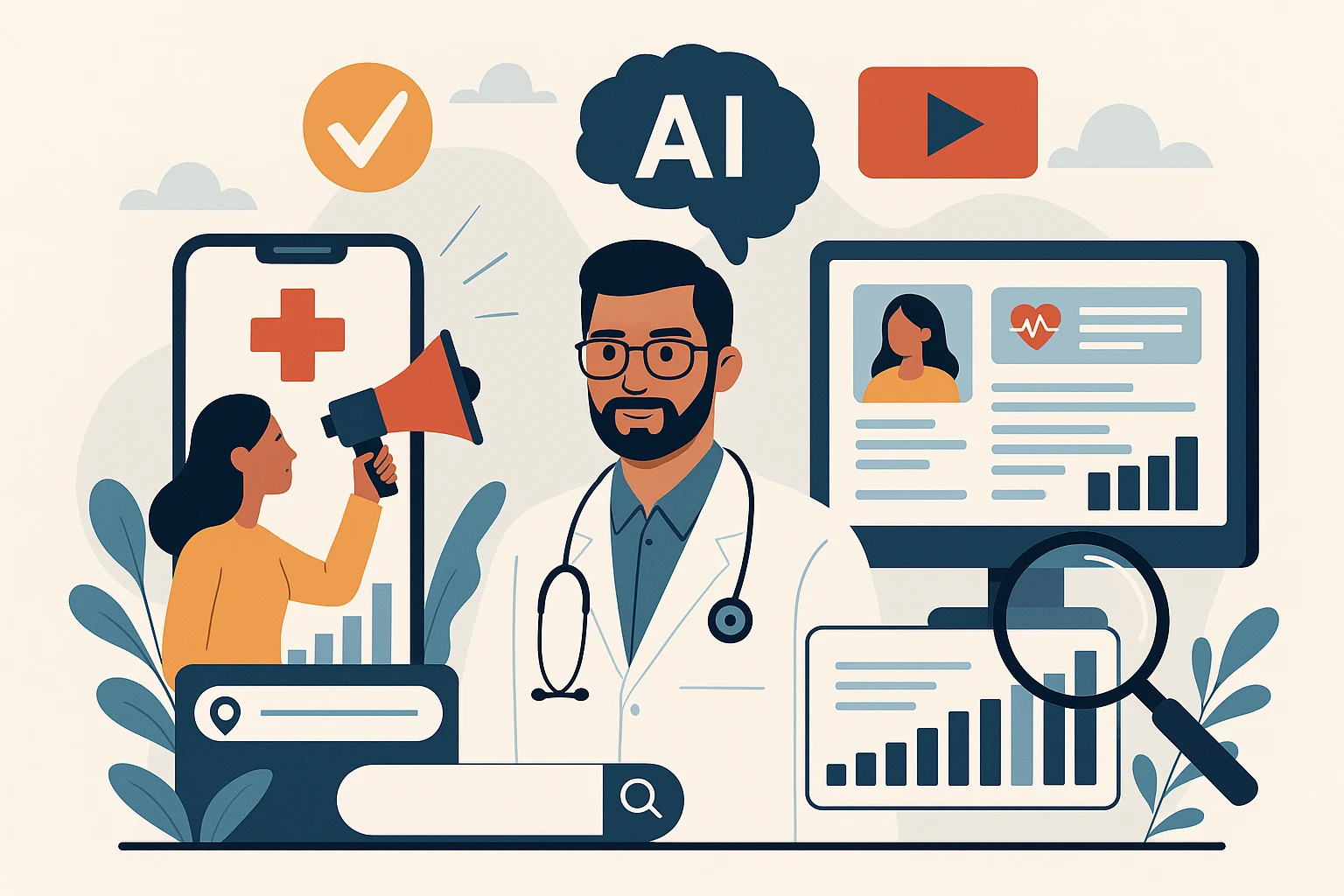
India’s healthcare industry is booming – estimated at $372 billion in 2023 and projected to reach ~$638 billion by 2025 – driving fundamental shifts in how providers and healthtech firms market services. Traditional tactics (TV, print, hoardings and doctor referrals) dominated through the 2010s, but by 2025 the focus has shifted sharply to digital-first, patient-centric strategies. Hospitals and healthtech platforms are prioritizing web/SEO, social media, content and community engagement as core channels . Artificial intelligence (AI) is revolutionizing personalization (chatbots, targeted content, predictive analytics, automated campaigns) and improving marketing ROI, though care must be taken around data privacy, bias and accuracy.
A key driver of change is massive investment and consolidation. Between 2022–24, Indian healthcare saw nearly $6.8 billion in M&A and ~$5 billion in PE funding , and 2024 alone had ~$6.1 billion of deals (up 24% year-on-year) . Hospital chains (Apollo, Fortis, Max, Narayana, Manipal, etc.) are expanding into Tier-2/3 markets, acquiring smaller centers and scaling up marketing capabilities . Mid-sized providers, in turn, must use targeted branding – emphasizing niche services, quality accreditations and digital outreach – to compete. Meanwhile, the wellness industry (fitness, nutrition, preventive care) is also surging (India’s health & wellness market was about $156 billion in 2024, on track for ~$257 billion by 2033 ) and requires distinct marketing: lifestyle branding and influencer partnerships. Similarly, healthtech startups (telemedicine, e-pharmacy, diagnostics) have seen resurgent VC funding ($1.13 billion in 2024 after a 2023 dip) and must market on convenience, technology and trust.
Looking ahead, 2025 healthcare marketing in India will hinge on must-have elements like strong digital presence (website, SEO, social media), patient engagement tools (online booking, teleconsultation, chatbots) and data-driven campaigns . “Should-have” strategies include content marketing (blogs, video patient stories), targeted CRM/email programs, community outreach and partnerships (with insurers, local influencers or corporates). “Good-to-have” innovations – immersive VR/AR experiences, advanced AI personalization, loyalty apps, health podcasts – can further differentiate brands but are secondary to the essentials. Ultimately, healthcare marketers must adapt to a data-rich, patient-empowered market, leveraging new technology and investment trends while upholding trust, ethics and quality of care.
Evolving Marketing Strategies: From Past to Present
Until recently, Indian healthcare marketing relied heavily on traditional media and word-of-mouth. Big hospitals advertised through TV spots, newspapers, billboards, and medical journal ads, while much patient acquisition came through doctor referrals and hospital reputation. Direct-to-consumer advertising by doctors was (and largely remains) restricted by medical ethics guidelines, so providers focused on brandbuilding and general public education. These tactics built brand recall, but struggled with personalization or measurable ROI.
Since 2020, a digital revolution has reshaped strategies. The COVID-19 pandemic accelerated telemedicine and online health tools, forcing providers to meet patients “where they are” – on mobile and online. By 2025, online patient engagement is expected, not optional . Providers now invest in user-friendly websites, SEO, social media campaigns, content marketing and targeted digital ads. For example, many hospital chains publish health blogs, patient testimonials videos and interactive Q&A sessions on Facebook/ YouTube. Appointment booking and tele-consultation platforms (e.g. Practo, 1mg, MFine) use personalized email/SMS reminders and AI chatbots to handle queries 24/7 . Marketing budgets have shifted accordingly: digital/online spend has grown rapidly, while TV/print budgets have flattened. This “always-on” digital approach allows precise tracking of campaign performance (e.g. clicks, leads, conversions), enabling data-driven refinement that traditional media could not offer.
Importantly, the patient audience has changed too. More urban and even rural Indians today research symptoms online, compare providers, and expect digital service (e.g. booking via apps, Whatsapp followups). Younger patients favor health education content on Instagram/TikTok and reviews on Google. As a result, healthcare marketers blend authenticity with technology – telling real patient stories and health tips in a digital-friendly format, while maintaining evidence-based messaging. For example, Apollo Hospitals and Max Healthcare feature physician Q&As on YouTube; PharmEasy and 1mg run Facebook ad campaigns explaining medicine delivery benefits; and many providers collaborate with fitness/yoga influencers to reach wellness audiences. These strategies illustrate how content-driven, patient-centric approaches (blogs, social posts, influencer tie-ups) are now core, as noted: “Digital marketing is one of the most critical strategies for healthcare, using social media, SEO and other techniques to attract new patients and keep them engaged”
The Role of AI in Healthcare Marketing
Artificial Intelligence is increasingly embedded in every layer of healthcare marketing in India. Its benefits are substantial: AI-driven tools enable 24/7 chatbots and virtual assistants that answer common patient queries, triage requests, and book appointments automatically . For instance, leading hospitals (Apollo, Fortis) and telehealth apps deploy AI chatbots on websites and WhatsApp to handle FAQs and provide personalized care instructions, improving patient experience while reducing staffing burden. AI also powers personalized content: by analyzing user data (age, location, search history), marketers can push relevant articles, emails, or ads – e.g. sending diabetes management tips to patients with related history. This hypertargeting boosts engagement and trust, as one guide notes: “AI enables marketers to go beyond generic messaging by analyzing individual patient data… creating hyper-personalized content… which increases engagement and leads to better health outcomes”.
Beyond communication, AI powers predictive analytics for campaigns. Models trained on historical data (search trends, seasonal illness patterns) can predict which populations might need services (e.g. potential mothers for prenatal care campaigns, or elderly for heart check packages) . Marketers can then launch timely, precision campaigns (such as targeted ads or alerts) that maximize ROI. Automation is another gain: AI systems schedule and optimize digital ad spend, adjust bidding in real time, and score leads, freeing marketing teams to focus on strategy . Additionally, voice-search optimization – using AI insights on how patients speak into voice assistants – helps healthcare websites rank higher for spoken queries (e.g. “nearest MRI center”) .
However, these AI advances require caution. Patient data in India is sensitive, and marketing tools must comply with privacy norms (the pending Data Protection Bill and sector guidelines). Marketers must avoid intrusive profiling or unverified medical advice. Also, AI models can be “black boxes” – for example, a chatbot might generate information that is technically incorrect or out of date. Healthcare providers must therefore institute strict review: all AI-generated content (chat responses, automated emails) should be vetted by medical professionals. There is also the risk of bias: if an AI tool is trained on non-representative data, it may mis-target certain groups or overlook marginalized populations. As one report cautions, healthcare professionals often resist AI because of “lack of trust in AI-generated recommendations”. Finally, regulations are evolving: guidelines on medical advertising and emerging rules for health influencers (as noted recently by India’s consumer affairs ministry ) mean that marketing campaigns – even AI-driven ones – must remain transparent and evidence-based. In summary, AI offers huge efficiency and personalization upside, but healthcare marketers must implement it responsibly, with human oversight and adherence to ethical standards.
Healthcare, Wellness, and HealthTech: Distinct Markets, Distinct Approaches
India’s health ecosystem spans three related but distinct segments, each demanding different marketing lenses:
- Healthcare (Medical Services and Pharma): This covers hospitals, clinics, diagnostics, and pharmaceutical providers focusing on curative care. Marketing here emphasizes trust, expertise and outcomes. Strategies highlight credentials (NABH accreditations, specialist doctors, facility quality) and use patient success stories to build confidence. For example, Apollo Hospitals may run campaigns around its successful heart surgeries or use case studies; Fortis or Max Healthcare frequently showcase patient testimonials for complex treatments. Regulatory considerations are strict: direct claims (especially for drugs) are controlled, so messaging is factual and often doctor endorsed. Patient education content (e.g. articles on managing hypertension) is common, as is community outreach (health camps, free screenings) to demonstrate social commitment. In sum, healthcare marketing uses authoritative, evidence-driven content and multi-channel outreach (TV for broad awareness, digital for inquiries, PR for thought leadership).
- Wellness (Preventive and Lifestyle): This fast-growing segment includes yoga studios, nutrition supplements, fitness centers, alternative medicine (Ayurveda), and consumer health products. Here, marketing is more aspirational and lifestyle-oriented. Brands use emotional storytelling, influencers and aspirational imagery. For instance, wellness companies partner with fitness or yoga influencers on Instagram to promote supplements or classes. Campaigns focus on feelings (“feel good,” “well-being,” “mindfulness”) rather than cures. The line between healthcare and wellness is blurring: major hospitals now offer wellness programs and integrative medicine departments (per AHMP notes ), and they market these to tap preventive health demand. The wellness market’s scale is huge – IMARC projects India’s health & wellness market will rise from $156 billion in 2024 to ~$257 billion by 2033 – so marketing here often uses consumer retail techniques (social media, e-commerce, influencer marketing ) and requires caution against unverified health claims. Government interest (e.g. WHO’s traditional medicine center in Jamnagar) also means wellness messaging often ties in heritage (Ayurveda, yoga) with modern appeal.
- HealthTech (Digital Healthcare Platforms): This includes telemedicine apps (Practo, Apollo24/7, MFine), online pharmacies (PharmEasy, Tata 1mg), lab aggregators (Netmeds, Healthians, others), and healthcare software/services. Marketing here is often tech-driven and convenience-focused. Startups emphasize ease-of-use: one-click doctor booking, home sample pickup, medicine delivery in 2 hours, etc. They use digital channels heavily (Google/Facebook ads, app store optimization, SEO) and measure metrics closely (download numbers, active users). Trust is built via transparency (e.g. showing physician credentials on profiles) and by promotions (discounts, membership deals). Healthtech firms also rely on content marketing (blogs on health topics to drive SEO) and PR (media stories on funding rounds or scale). Given the competitive investment environment, platforms often highlight scale metrics (e.g. Practo announced 22% revenue growth to ₹240 crore FY24 and ₹3,500 crore in annualized gross merchandise value ) as proof of market leadership. Marketing in this segment is dynamic: it leverages analytics to optimize user acquisition, often partners with hospitals (e.g. online booking tie-ups), and must quickly adapt to policy changes (e.g. regulations on telemedicine or e-pharmacy licensing).
In summary, healthcare marketing is credibility-driven and often regional; wellness marketing is emotional and national (with aspirational influencers); healthtech marketing is digital-first and scale focused. Marketers must tailor strategies: a hospital and a yoga chain, for example, will use entirely different messaging and channels. However, convergence is occurring – hospitals are becoming “consumer friendly” brands and wellness players are adopting more medical legitimacy – so the lines are blurring. Regardless, segment-specific positioning and regulatory compliance remain vital.
Private Equity, M&A, and Marketing Strategy Shifts
An unprecedented wave of consolidation and investment is reshaping India’s healthcare landscape – and its marketing. Recent reports show healthcare M&A and PE inflows surging: between FY2022 and FY2024, total hospital M&A value was about $6.76 billion with cumulative PE funding around $5 billion . In 2024 alone, the sector saw $6.1 billion of deals (up 24% from 2023) . Over the longer term, the 2018–22 period saw roughly $35 billion in healthcare PE/M&A , and 2023 saw a record $5.5 billion of investments . Major hospital chains (Apollo, Manipal, Medanta, Aster, etc.) and large investors (KKR, TPG, GIC, etc.) have been active buyers of standalone hospitals and diagnostics, especially targeting Tier-2/Tier-3 cities.
Implications for marketing: Consolidation brings scale and professionalization of marketing. Larger hospital groups now have in-house brand teams or agencies, higher marketing budgets, and unified brand guidelines. For example, after acquisitions, a chain may rebrand facilities, roll out new service lines, or introduce cross-hospital loyalty programs – all requiring coordinated campaigns. PE backers often push for digital transformation and data-driven marketing to maximize ROI, so expect more analytics, CRM systems, and marketing dashboards. Consolidation can also change messaging: when smaller hospitals are subsumed, marketing focuses on the network’s breadth (e.g. “100+ locations nationwide”) and expanded capabilities.
However, there are challenges: consolidation can lead to increased competition and marketing “arms races.” If five big chains operate in one city, each advertises aggressively for outpatient and specialty services. This can drive up media costs, forcing mid-size players to find niche positioning. Moreover, Jasaro Consulting notes that PE-driven consolidation sometimes leads to higher costs for patients without clear quality gains ; this increases scrutiny of marketing claims. Marketers must therefore ensure transparency and avoid over-promising outcomes.
On the healthtech side, consolidation trends also appear. Large hospital chains are investing in or partnering with telemedicine and pharmacy platforms (e.g. Apollo’s investment in Portea or Tata’s acquisition of 1mg). VC funding in healthtech rebounded sharply – from about $419 million in 2023 to $1.13 billion in 2024 – driven by renewed interest in AI and digital health. This influx means more startups competing with new features (e.g. AI triage, D2C genetic tests) and marketing must emphasize innovation. For instance, PharmEasy’s recent fundraising of ~$216 million was accompanied by campaigns on nationwide pharma delivery; similarly, Practo highlights its 22% revenue growth and 17 cr loss narrowing as indicators of maturity.
In summary, big-money deals are forcing healthcare companies to professionalize marketing. Brands backed by PE/VC are more aggressive: they leverage data analytics, digital content, and performance marketing to fuel rapid user growth. At the same time, strategic shifts (like moving into insurance partnerships or wellness) open new marketing narratives. Healthcare marketers must remain agile, integrating the strategic direction of investors and M&A (e.g. emphasizing scale and tech) with the core need to build patient trust.
Consolidation’s Consequences: Scaling and Branding for Mid-Sized Providers
As large chains buy or outcompete smaller players, many mid-sized hospitals and clinics face the dual challenge of surviving and scaling. Consolidation creates brand giants on one side and “gap” areas on the other: Tier-2/Tier-3 regions may suddenly have better networked options, but many secondary cities still have only independent or regional providers. For these companies, marketing strategy becomes crucial for growth and perception.
- Scaling Strategically: Mid-sized healthcare firms often lack the marketing budget of the giants, so must be strategic. They can scale by networking – forming alliances with other hospitals or joining group buying organizations – and then co-marketing. For example, a cluster of ten regional hospitals might pool resources to run a common digital campaign or share telemedicine referrals. They can also scale services gradually into new cities: launching a center of excellence (e.g. a dedicated cardiac block) in a mid-city, then using its success stories to brand the network.
- Brand Perception: Building a strong brand in healthcare is tough for smaller players, since trust and reputation are usually earned over many years. Mid-sized hospitals should emphasize what makes them unique: perhaps highly qualified specialists, advanced technology adoption (e.g. robotic surgery, tele-ICU), patient satisfaction scores, or shorter wait times. Publishing such differentiators on the website, social channels and in local press can raise perceived quality. Digital tactics help here: maintaining active Facebook/Instagram pages with patient testimonials, health tips, and announcements (new facility, awards, community events) reinforces that the hospital is modern and patient-centered. Even small marketing touches, like professional branding on uniforms and a welcoming website, boost credibility.
- Leveraging Local Ties: Mid-sized players often have strong local roots. They should leverage community engagement: sponsoring local health camps, free check-up days, school health talks or employer wellness programs in the region. Such grassroots activities generate press coverage and word-of-mouth referrals. Customer loyalty programs can also help – for example, partnering with local businesses or health clubs to offer their customers discounted screenings.
- Digital Reach: Importantly, digital tools level the playing field. A well-executed local SEO strategy can make a Tier-2 hospital appear in Google searches for “best hospital [City]” even if it’s smaller. Listing accurate information on Google My Business, Practo, and healthcare directories ensures visibility. Encouraging satisfied patients to leave positive online reviews (with due ethical care) builds online reputation. Telemedicine is another area: a regional hospital can offer online consultations to neighboring areas, broadening its brand reach without physical expansion.
All these steps require investment in marketing capability. Mid-sized firms may hire external agencies or form marketing consortiums. The narrative must be consistent: while big chains advertise “trust us, we’re nationwide,” smaller players should highlight local expertise and personal care. For example, a mid-level chain might run a campaign “Hometown Excellence in Cardiac Care,” focusing on a relatable story of a local patient. In short, as the industry consolidates, smaller providers survive by scaling judiciously and marketing their strengths – personal touch, specialization, and community trust – to improve brand perception.
Must-Have, Should-Have, and Good-to-Have Marketing Strategies
The following categorization helps healthcare marketers prioritize tactics in 2025. Each category includes strategies that fit budgets and goals for providers of any size.
Must-Have: These strategies are essential in today’s market. They ensure basic visibility and patient engagement.
- Strong Online Presence: A professional website with clear service information, doctor profiles, contact details and online appointment booking. The site must be mobile-friendly and SEO optimized so that patients searching for local services (e.g. “cardiology hospital Bangalore”) can find you.
- Local Search & Listings: Claim and maintain profiles on Google My Business, Practo, Justdial and other relevant directories. Keep hours, address, phone up to date and encourage satisfied patients to leave reviews (while following all regulatory norms). Positive online reviews boost credibility.
- Social Media Presence: Active accounts on platforms like Facebook, Instagram and LinkedIn are now mandatory. Post regular health tips, patient stories, staff introductions, event announcements and health awareness campaign materials. Social media allows hospitals to connect with younger audiences and provides an avenue for paid advertising.
- Content Marketing: Publish useful health content (blogs, infographics, videos) on your website and social channels. For example, a knee hospital might post articles on “Exercises to Manage Arthritis.” As one study notes, “SEO and social media…are required to attract new patients and keep them interested” . Thoughtful content also educates patients, building trust and enhancing SEO.
- Patient Engagement Tools: Implement patient-centric digital tools – online appointment and bill payment portals, WhatsApp support, email/SMS reminders for appointments or follow-ups. AI chatbots or helplines that answer basic questions improve satisfaction. Integration with electronic medical records (when possible) adds value. The AHMP notes that “online patient engagement is no longer a luxury—it’s an expectation”.
- Telemedicine Service: Offering virtual consultations has gone from optional to essential. Even offline-centric hospitals need a telehealth wing to serve remote patients and capture digital-savvy users. Promote your telemedicine on all channels – it’s a key entry point to other services.
- Basic Analytics: Use simple tools (Google Analytics, CRM dashboards) to track campaign performance (website visits, ad clicks, appointment sources). Data-driven adjustments (e.g.
reallocating ad spend) are musts for optimizing budgets.
Should-Have: These add meaningful value after the essentials are in place.
- Targeted Advertising: Run paid search (Google Ads) and social media ad campaigns targeted by geography, age or interest. For example, promote diabetes care packages to people above 40 in certain postal codes. This complements organic efforts and can quickly drive inquiries.
- Community & PR Campaigns: Organize health camps, vaccination drives or expert webinars, and publicize them through local media or social channels. Participation in community events raises brand awareness. PR stories in local press about patient success, new technology or CSR initiatives amplify trust.
- Influencer/Brand Partnerships: Engage health and wellness influencers (for wellness products) or micro-influencers in relevant communities. An endorsement by a respected nutritionist or fitness coach can lend credibility to a wellness brand or a preventive health campaign. Given India’s planned guidelines on health influencers , ensure any collaboration is transparent and factual.
- Email/CRM Campaigns: Build an opt-in mailing list (e.g. through patient registration) and send newsletters or targeted emails: follow-up care information, new service announcements, or health tips personalized by patient history. Automated drip campaigns (e.g. pre- and post-surgery instructions) can improve outcomes and loyalty.
- Video Content & Virtual Tours: Create short videos – virtual walkthroughs of the facility, doctor introductions, patient testimonials – and share on social and YouTube. Videos are highly engaging and can demystify hospital experiences.
- Multilingual & Localized Content: Tailor marketing materials to local languages and cultural contexts in Tier-2/3 areas. Even social posts or brochures in Hindi, Tamil, Bengali, etc. help connect with non-English-speaking patients.
Good-to-Have: These are advanced or novel tactics that can differentiate a brand but are not urgent.
- AI-Powered Personalization: Advanced marketing automation that uses AI to segment patients and send hyper-personalized messages. For example, auto-adjusting website content based on visitor behavior, or AI-curated health tips in push notifications.
- Virtual/Augmented Reality Experiences: Cutting-edge providers may offer VR tours of surgical suites or use AR apps to explain procedures. This “wow factor” is still niche but can attract tech-savvy patients and press coverage.
- Mobile Health Apps: Developing a branded app (for appointment booking, health records, teleconsult) enhances loyalty. An app can also gamify wellness (step challenges, medication reminders). However, apps require scale to be cost-effective.
- Patient Community Platforms: Some health systems host online support forums or WhatsApp groups for chronic patients (e.g. diabetes clinics) moderated by doctors. This fosters community and brand engagement.
- Podcasts and Webinars: Producing health podcasts or webinars with experts can position the brand as a thought leader. This is niche but growing in urban markets, especially for wellness and chronic disease education.
- Non-Traditional Channels: Pop-up checkup booths in malls, VR health kiosks, or partnerships with consumer brands (e.g. health checks at gym chains) can capture attention. These are “nice-to-have” experiments for larger budgets.
In practice, every provider’s exact “must/should/good” list will vary by size and segment. For example, a small clinic’s musts might end at social media and referral programs, while a large chain’s musts include a comprehensive digital platform and SEO. Importantly, all marketing should remain ethical and compliant: no sensationalism, accurate clinical information, and respect for patient privacy. As the above list suggests, a balanced mix of digital presence, educational content, and community engagement – executed consistently – will ensure healthcare brands stay visible and trusted in 2025 and beyond.
Conclusion
Healthcare marketing in India is at a pivotal juncture. The convergence of digital technologies, AI, and unprecedented capital investment is transforming how providers reach patients. Digital engagement, personalized content and data-driven outreach are no longer optional – they are table stakes . At the same time, marketers must distinguish between very different segments: running a precise, evidence-based campaign for a hospital is not the same as a lifestyle-aspirational campaign for a wellness brand. Private equity and M&A are creating healthcare super-chains with bigger budgets and analytics capabilities, but they are also elevating consumer expectations industry-wide.
For mid-sized players and newcomers, the challenge is to either scale quickly (e.g. by partnering or specializing) or to deeply differentiate (e.g. focusing on exceptional patient experience or niche services). Across the board, maintaining patient trust and ethics is paramount – marketing must fight misinformation and earn patient confidence as core brand assets. In 2025, the successful healthcare marketer in India will be a hybrid: technology-savvy and data-literate, yet empathetic and authentic. They will harness AI and digital tools to deliver the right message at the right time, but always with a human touch. They will leverage the latest marketing channels (social, mobile, telemedicine platforms) while never losing sight of quality care and compliance. By implementing the “must-have” fundamentals (digital presence, patient engagement systems) and layering on “should-have” and “good-to-have” innovations appropriately, healthcare organizations can scale effectively and build powerful brands. The market is competitive, but it is also enormous and growing – from hospitals to insurance to healthtech, the opportunity is vast for those who master the new playbook of healthcare marketing in India
